

Chaga mushroom: the king of mushrooms
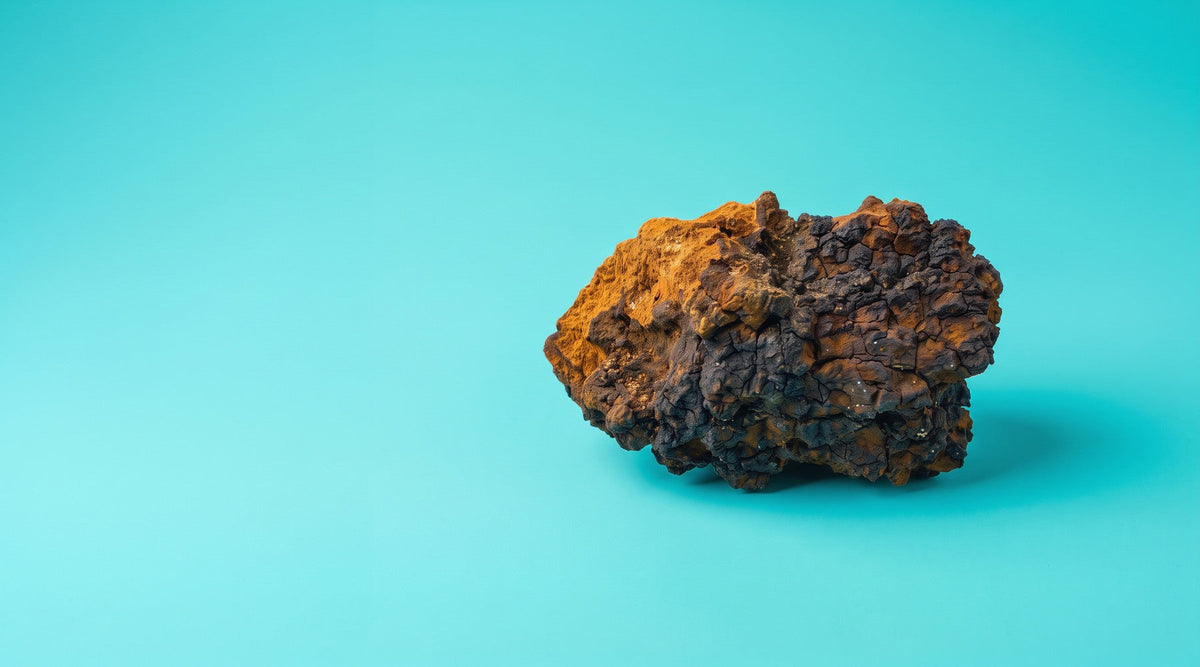
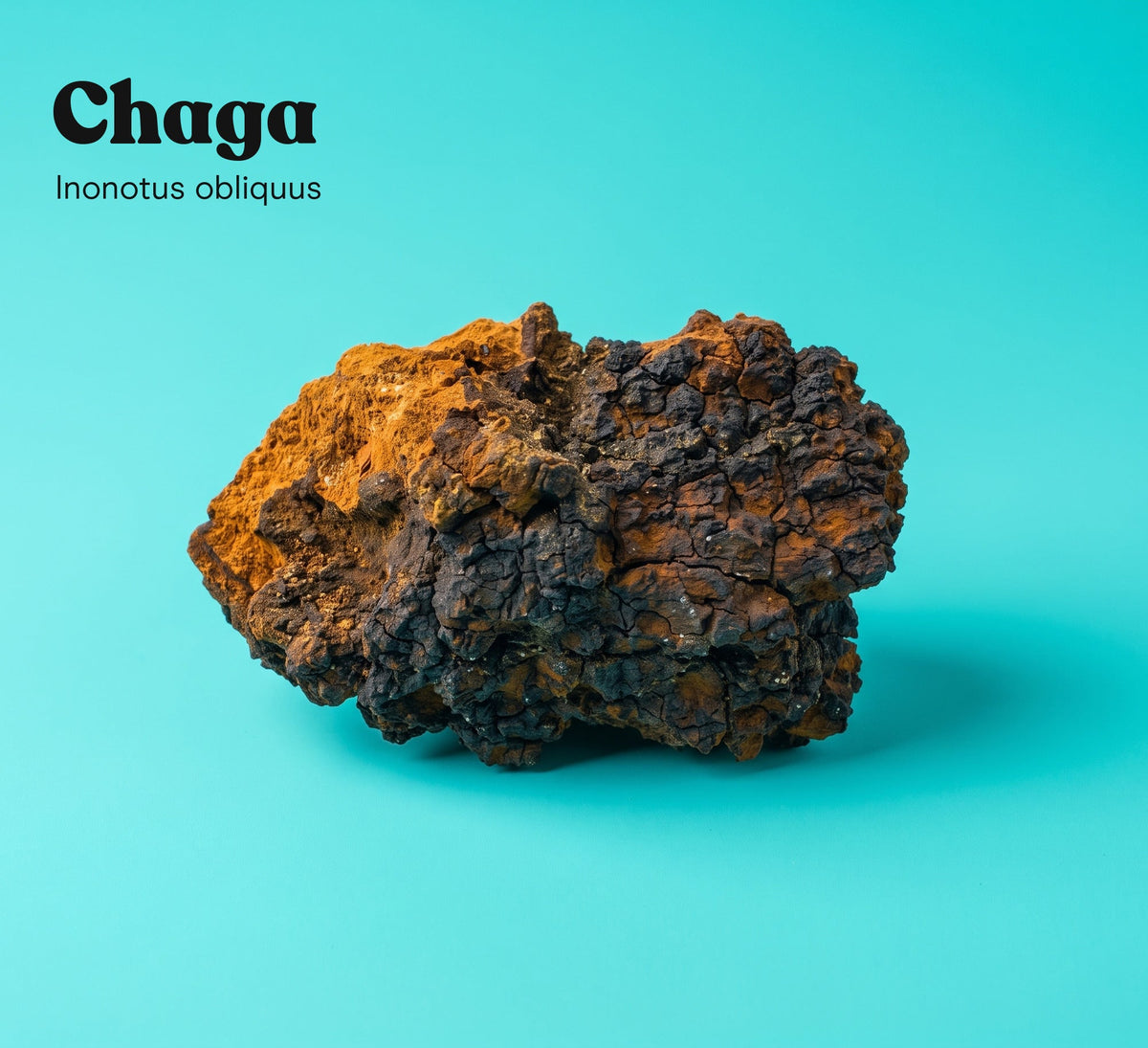
Often mistaken for a clump of soil or a charred part of a tree, to the experienced eye the Chaga mushroom can be told apart by its bright, golden-orange interior. So let’s give these ugly ducklings their due, and take a closer look at what makes them so interesting.
Getting to know Chaga, the king of mushrooms
Inonotus obliquus, commonly called Chaga and affectionately known as the king of mushrooms, is harvested from birch trees in Siberia and other cold northern forests. It has been part of folk traditions for centuries, where it was typically simmered slowly into a dark, warming drink. Its naturally occurring compounds include beta-glucans and other polysaccharides, along with betulinic acid — all present in the fungus in their natural form.
These fungi may resemble charcoal on the outside, but hidden beneath is a bright orange centre. The burnt appearance of the sterile conk is not the fruiting body of the fungus, but a sclerotium, or mass of mycelium, mostly black because of a high amount of melanin. So let’s dig a little deeper into this striking, golden-hued fungus.
Chaga’s abundance of beta-glucans
Beta-glucans, β-glucans, beta-d-glucans, polysaccharides… despite carrying many titles, beta-glucans are a group of naturally occurring polysaccharide compounds.
Beta-glucans (also known by their more technical name beta-d-glucans) are a class of indigestible polysaccharide fibres. They are found not only in mushrooms but also in bacteria and in plants such as oat and barley. The beta-glucans found in fungi have a distinctive β-(1→6) branching structure.

How people enjoy Chaga
Traditionally, Chaga was not eaten raw but simmered slowly to make a dark, earthy, subtly bitter drink — sometimes described as having coffee-like notes. Today, people most often use Chaga extract powder in much the same way: stirred into hot water for a tea, added to coffee, or blended into smoothies and warm milk drinks. It is enjoyed as part of a daily routine, in the same way you might reach for any other warming drink.

Where Chaga grows and how it is harvested
Chaga grows slowly on living birch trees across the cold forests of the northern hemisphere — Siberia, Scandinavia, northern Canada and parts of northern Europe — often taking years to develop into the woody, blackened mass that foragers recognise. It is traditionally harvested by carefully removing the conk from the tree, ideally leaving part of it behind so the mushroom can continue to grow on the birch.
Beyond its beta-glucans, Chaga naturally contains a number of other compounds that scientists have catalogued in the fungus, including betulinic acid, inotodiol and ergosterol peroxide, while its characteristic black exterior comes from a high concentration of melanin. These are noted here simply as compounds that occur naturally within the mushroom.
Food supplements should be part of a varied, balanced diet and a healthy lifestyle, not a substitute for one.
If you are pregnant, breastfeeding, taking any medication or managing a health condition, please consult a qualified healthcare professional before using any food supplement.
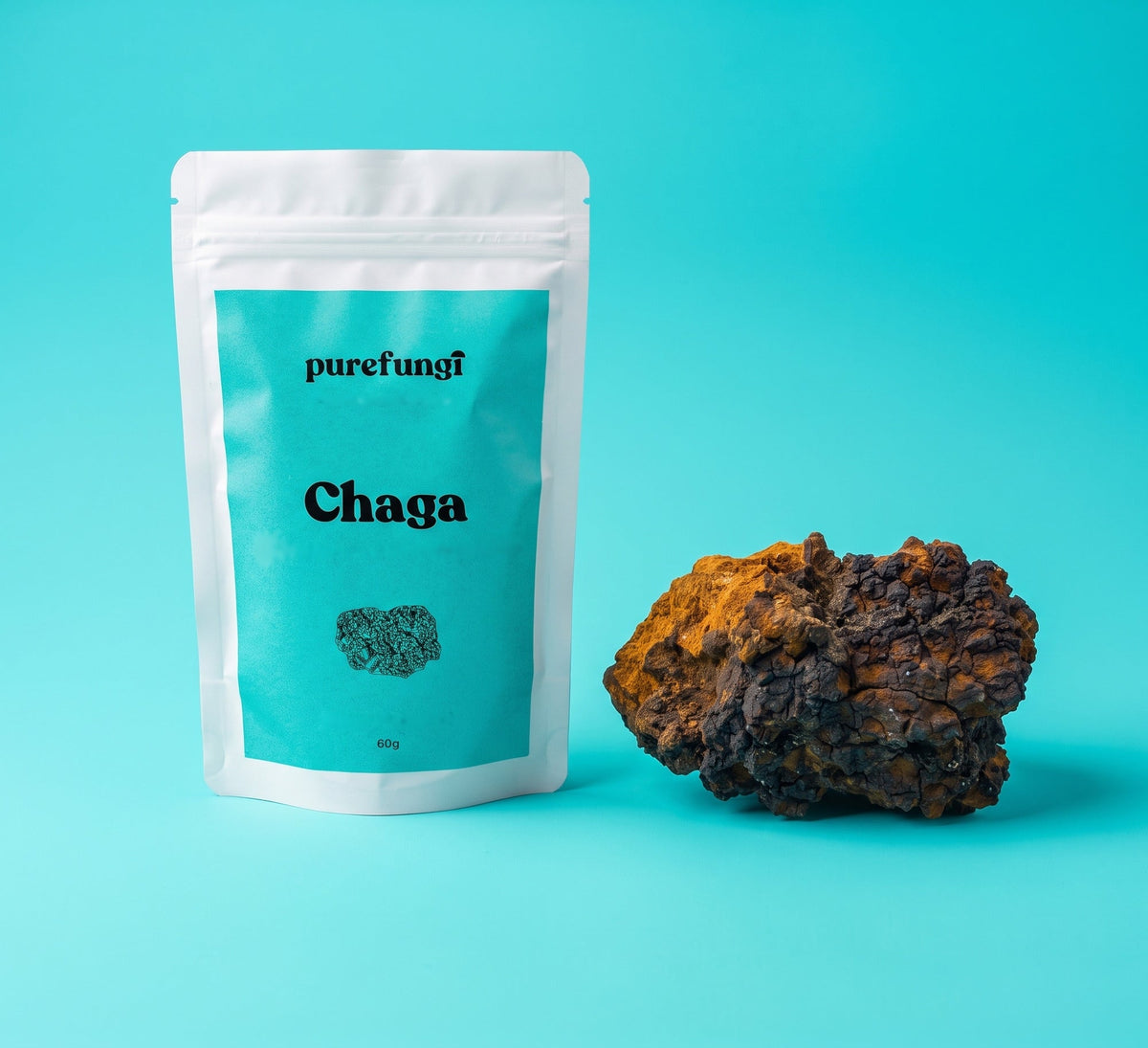
Shop our Chaga Mushroom Extract Powder →
Or browse the full Chaga collection.

1 comment
Can’t wait to try your products!
Reza
Leave a comment
This site is protected by hCaptcha and the hCaptcha Privacy Policy and Terms of Service apply.